Blackjack begins with a deceptively simple task: finish closer to 21 than the dealer without going over. The other people at the table are not your opponents. Each hand is settled against the dealer, so you can win while the person beside you loses, or lose while everyone else is paid.
Knowing that objective is useful, but it does not explain every decision on the screen. A table's payout, drawing rules and restrictions can change the game. This guide covers ordinary blackjack and shows which details deserve a second look. Special variants may use different rules.
Counting a hand without getting confused
Cards from two to ten count at face value. Jacks, queens and kings count as ten. An ace counts as either one or eleven, using the value that helps the hand without taking it over 21.
Consider an ace and a six. The hand can be seven or seventeen, so it is usually called soft seventeen. If the next card is a nine, the ace becomes one and the total is sixteen. Nothing has busted. By contrast, ten and seven is hard seventeen because there is no ace available to absorb an extra ten points.
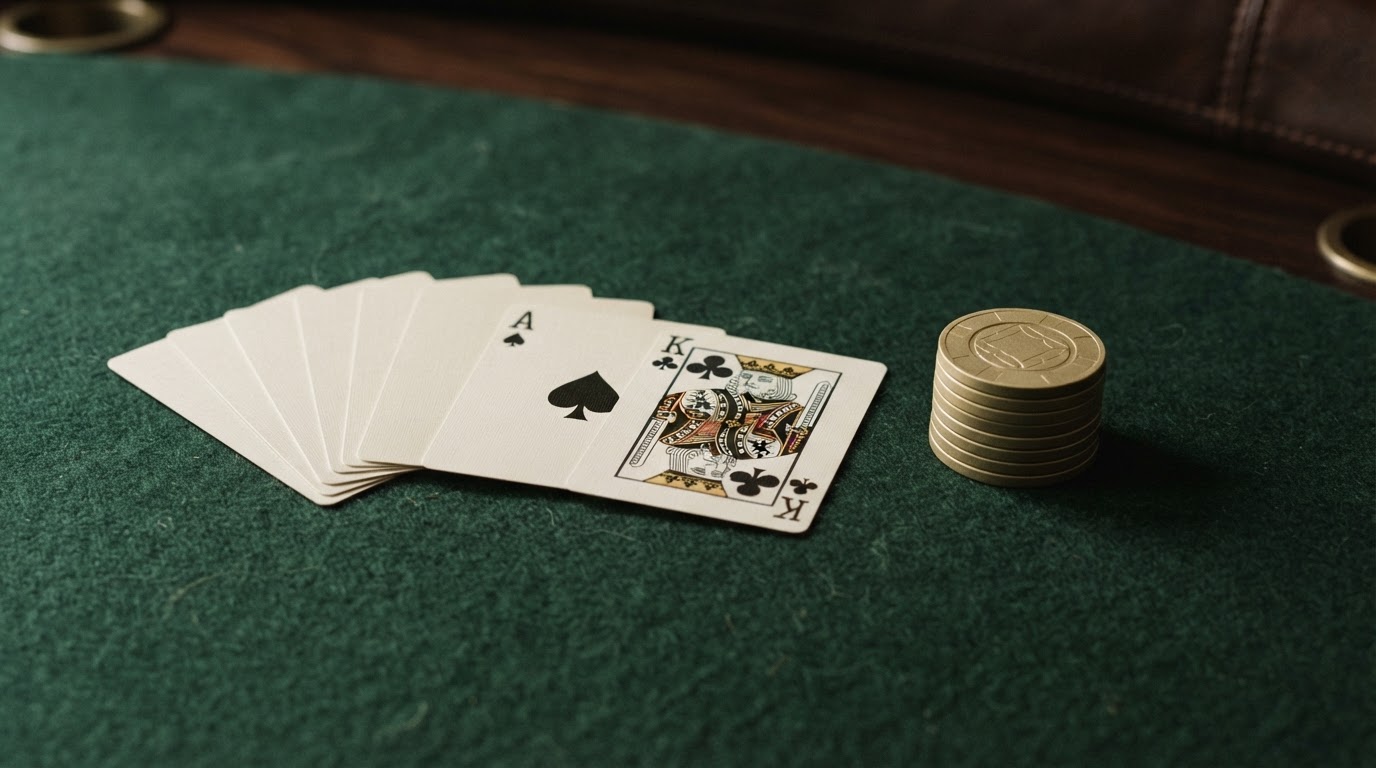
A natural blackjack is an ace plus a ten-value card in the initial two-card hand. Reaching 21 with three cards is normally a regular twenty-one, not a natural. A twenty-one after splitting may also receive different treatment; the table rules decide.
What happens during a round
You place a stake before the deal. In a common arrangement, you receive two cards and can see one dealer card. Some games deal the dealer's second card immediately, face down; other versions deal it later. That difference can matter when the dealer eventually has blackjack.
Once it is your turn, the interface offers the actions available for that hand. Hit requests another card. Stand ends your drawing. Going above 21 is a bust and usually loses the stake immediately, even if the dealer later busts too.
Suppose you have ten and six and take a four. You now have twenty. If you stand and the dealer finishes on nineteen, your ordinary winning hand is paid at even money: a £10 stake earns £10 profit, with the original stake returned as well.
If the dealer also has twenty, the usual result is a push. Your original £10 comes back, but you have not earned £10. Distinguishing a returned stake from a profit makes account histories much easier to read.
Doubling, splitting and surrender
Doubling down normally adds a stake equal to the original bet and gives you one final card. It increases the money at risk. Some tables restrict which starting totals can be doubled, and others allow doubling after a split.
Splitting turns an eligible pair into two separate hands, with an additional stake. The dealer then deals to each hand. Restrictions on split aces, repeated splitting and doubling after splitting vary. Two aces followed by two tens do not automatically produce two premium-paying blackjacks.
Surrender, where available, ends the hand in exchange for losing half the original stake. Its timing matters: early and late surrender are different rules. If the option does not appear, do not assume the software is missing a standard feature. Many tables simply do not offer it.
These actions are choices about an existing hand, not promises of a favourable result. A larger possible payout comes with a larger possible loss when additional money is staked.
Why 3:2 and 6:5 are different
The natural-blackjack payout is one of the easiest rules to check. With a £10 stake, a 3:2 payout gives £15 profit. A 6:5 payout gives £12 profit. In both cases, the original stake is also returned.
That £3 difference is easy to overlook because the headline event still says “blackjack”. Across repeated natural blackjacks at the same stake, however, the lower payout keeps returning less money. A smart-looking table or familiar game name does not cancel the arithmetic.
The dealer's soft-seventeen rule also deserves attention. Some tables require the dealer to stand on soft seventeen; others require another card. The dealer does not choose freely according to a mood or a prediction about your cards.
Insurance is a separate wager
When the dealer shows an ace, insurance may be offered. It is a side bet on whether the dealer has a ten-value hole card, usually limited to half the main stake and typically paying 2:1.
Imagine a £10 main stake and £5 insurance. If the dealer has blackjack, the insurance wins £10 profit, while the main hand may lose £10. The two outcomes need to be read together. The label “insurance” can sound protective, but it introduces another wager rather than making the hand risk-free.
Other side bets have their own paytables and probabilities. Understanding the main blackjack hand does not tell you whether a pair or suited-card side bet offers the same mathematical return.
A useful way to read the rules panel
Before considering real-money play, locate the natural payout, deck information, soft-seventeen rule, split restrictions and treatment of dealer blackjack. A practice mode can help you recognise buttons, although a short run of practice results says little about future outcomes.
Basic strategy charts are calculated for particular rule sets. A chart for a different game may give the wrong action. Following a suitable chart can reduce avoidable mistakes, but ordinary casino blackjack still involves financial risk and does not become dependable income.
You can learn the mechanics with cards on a kitchen table. Deal a few hands, count soft aces and practise calculating returned stakes separately from profit. No deposit is needed to understand what the buttons and payouts mean.